

Research Progress
Haidou-1 and Fendouzhe Complete Joint Hadal Scientific Expedition in the Western Pacific
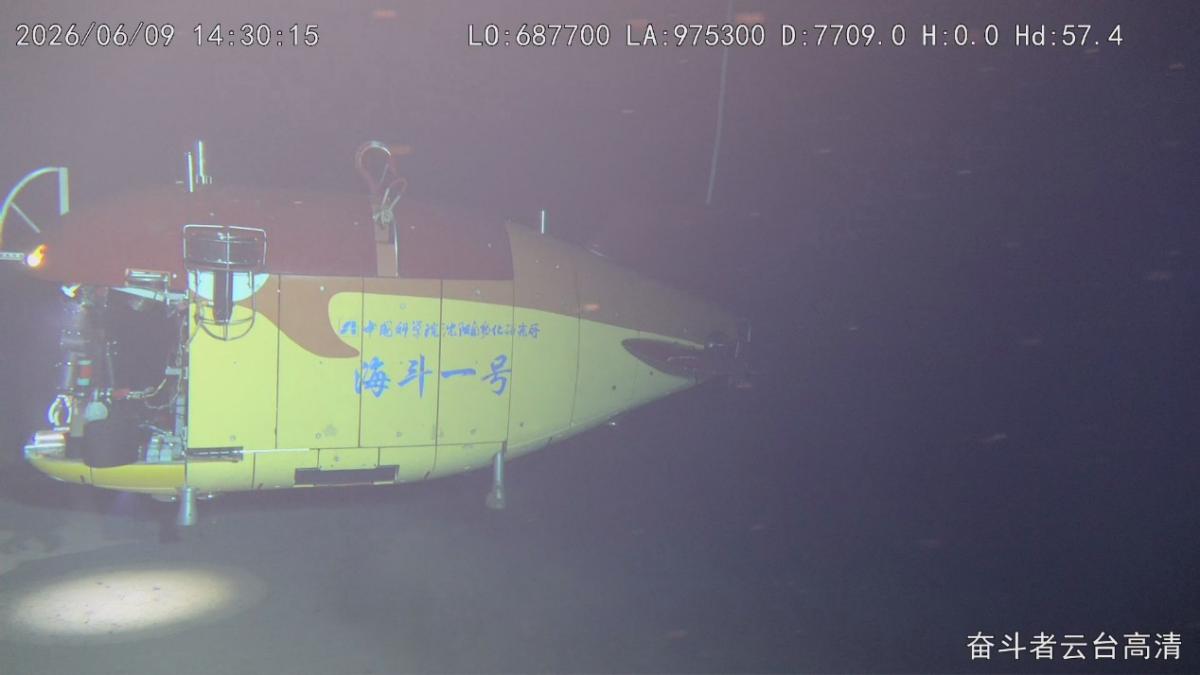
Fendouzhe captures Haidou-1 navigating on the seabed (Image by SIA)
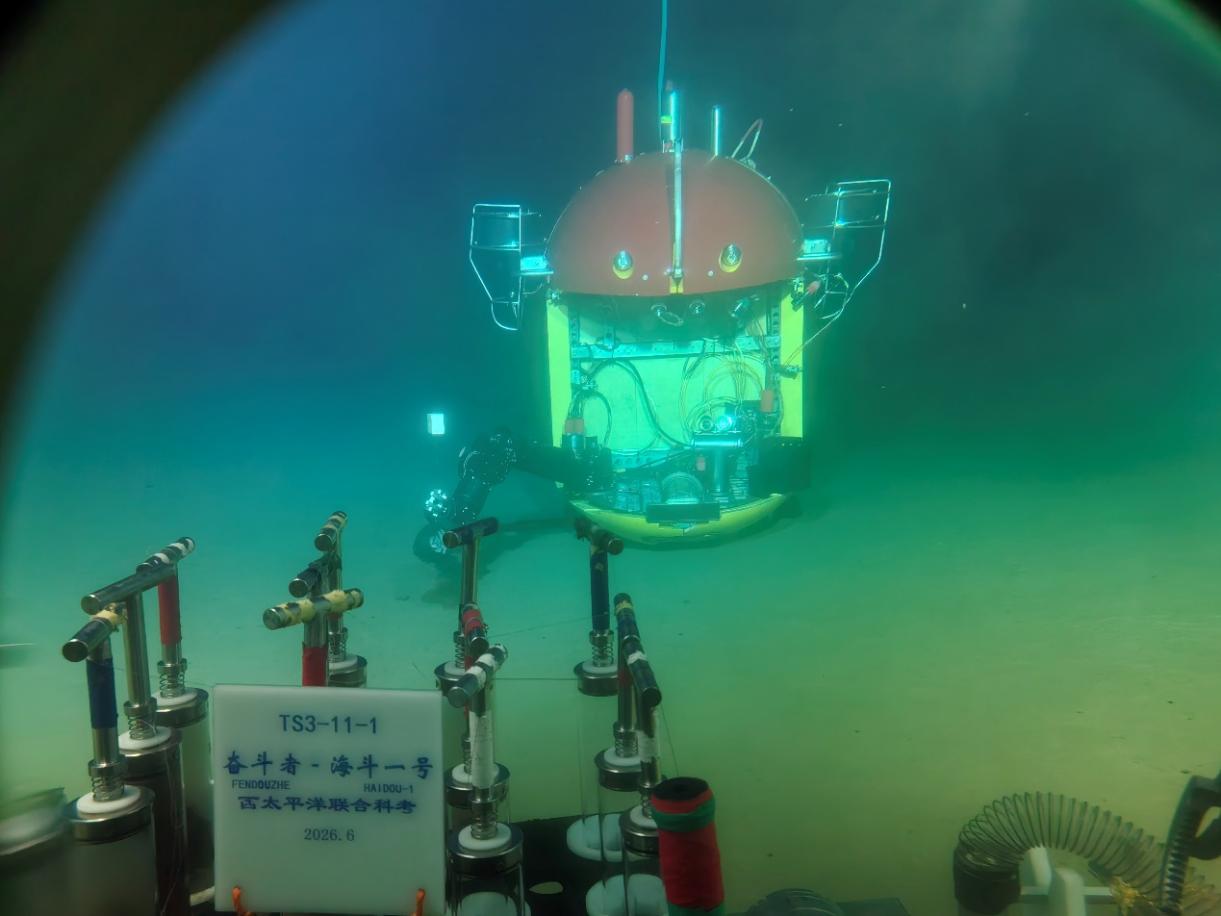
View of Haidou-1 from Fendouzhe’s manned cockpit (Image by SIA)
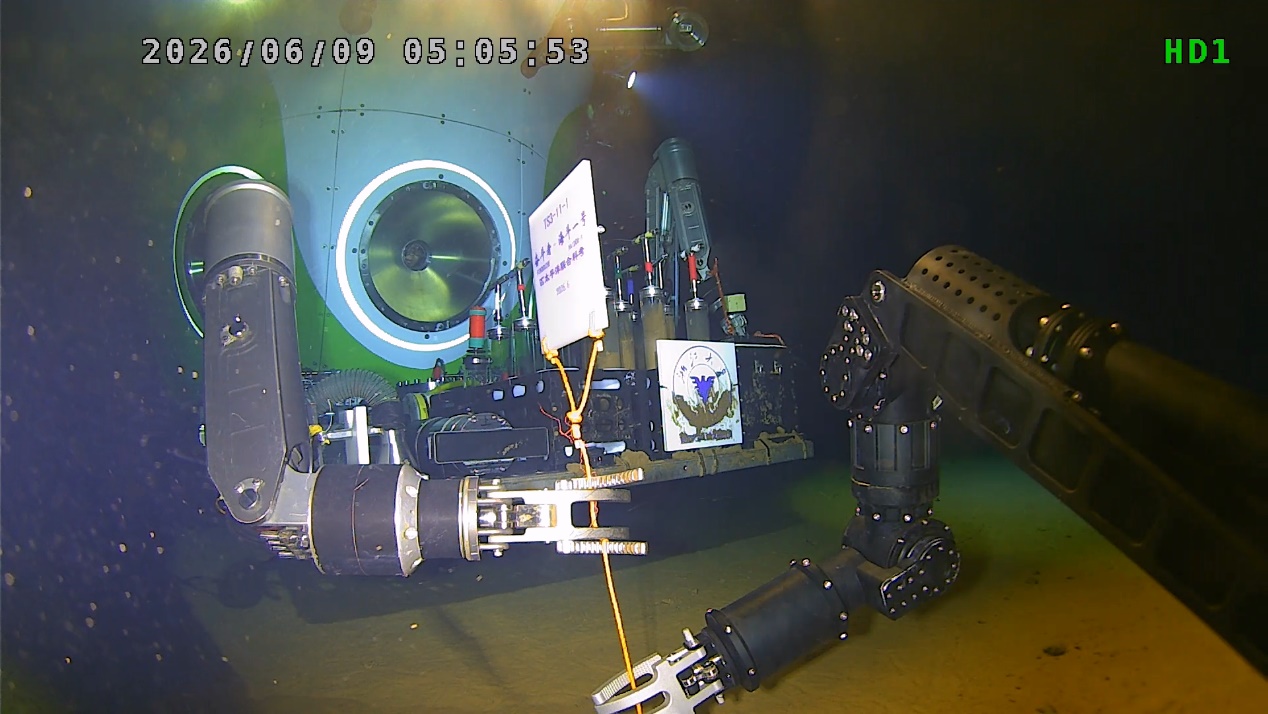
Haidou-1 and Fendouzhe collaboratively retrieving a joint-operation marker (Image by SIA)
Supported by the National Key R&D Program project Enhancement of Key Operational Technologies and Scientific Application Capabilities of Haidou-1, the full-ocean-depth Autonomous and Remotely-operated Vehicle (ARV) Haidou-1, developed under the leadership of the Shenyang Institute of Automation (SIA), Chinese Academy of Sciences, has recently completed its sea trial and scientific mission in the high seas of the Philippine Sea, Western Pacific, aboard the research vessel Tansuo-3, and safely returned to port.
During the cruise, Haidou-1 carried out multiple underwater rendezvous and coordinated hadal operations with the manned submersible Fendouzhe at a depth of around 7,700 meters. All staged acceptance indicators and preset hadal science research objectives were achieved.
During the sea trials and applications, Haidou-1 and Fendouzhe met at the 7,700m hadal seafloor and carried out a series of collaborative tasks, including close-range mutual photographic documentation, relay deployment of artificial baitfalls, joint collection of geological samples, exchange and replenishment of sampling tools, coordinated retrieval of a joint-operation marker, and dynamic filming of underwater navigation. In a single dive, Haidou-1 successively accomplished close-range underwater rendezvous and coordinated operations with both the manned submersible Fendouzhe and the Tianya lander, demonstrating the integrated performance of multi-equipment, multi-site collaborative underwater operations.
In response to real-time on-site mission requirements, Haidou-1 leveraged its human-machine collaborative strengths to achieve seamless switching between multiple operational modes. The voyage fully validated the integrated working paradigm of wide-area survey – target identification and verification – close-proximity intervention.The results highlight the deep-sea research capacity of Haidou-1, which features highly integrated autonomous and remote-control multi-mode systems and delivers high-efficiency execution of multi-task detection and intervention operations.
Throughout this sea trial and application campaign, Haidou-1 accomplished seven dives into the hadal zone. This mission marks the first successful joint hadal scientific expedition conducted by a full-ocean-depth unmanned ARV and a manned submersible in China.

