

Events
Kick-off Conference of the Major Program of NSFC "Generation Mechanism of Life-Like Intelligence Driven by Robotic Behavior" Held in Shenyang
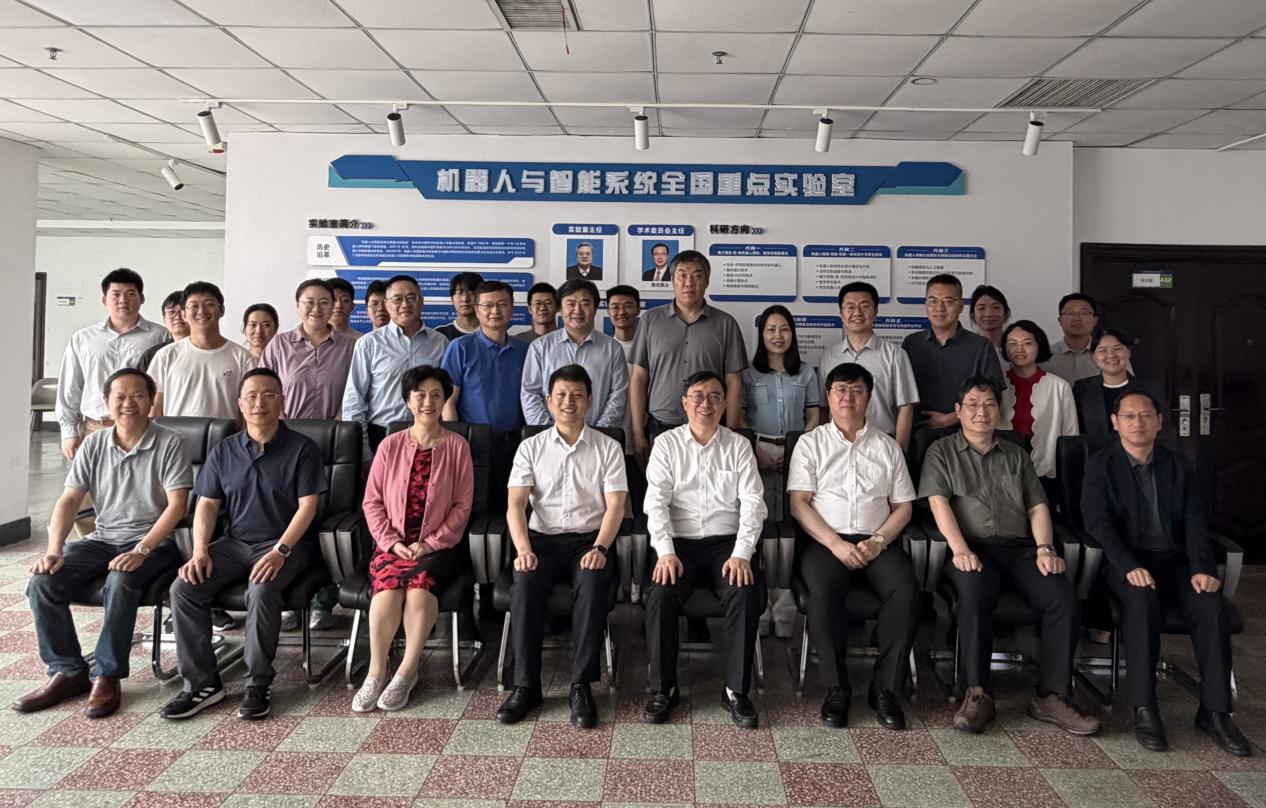
Conference Group Photo (Image by SIA)
On June 4, the conference for the Major Program of the National Natural Science Foundation of China (NSFC) titled "Generation Mechanism of Life-Like Intelligence Driven by Robotic Behavior" was held in Shenyang. The program is led by the SIA.
The meeting brought together more than 30 participants, including experts from Nanjing University of Aeronautics and Astronautics, Beijing University of Technology, the AIRCAS, Jiangnan University, Shandong University, East China University of Science and Technology, and Northeastern University, as well as directors of related departments under SIA, along with the program leader and principal investigators of each research task.
LIU Lianqing, the Deputy Director of SIA, noted that this program is one of the two major NSFC programs approved in 2025 for which the institute serves as the host institution for the first time. The approval of such a major program marks a significant step forward in the institute’s fundamental research capabilities and will provide a solid foundation for higher-quality research endeavors. As the institute leading the program,SIA will leverage its strengths in disciplinary and research platforms, provide robust personnel and implementation support, and ensure comprehensive follow-up management and services to facilitate the smooth execution of the program.
Professor HAN Zhi, principal investigator of the program, presented an overview of the overall research objectives, key scientific questions, and mechanisms for collaboration among the research tasks, and outlined the organizational plan for implementation. The principal investigators of each task also reported on their respective objectives, research content, and technical roadmaps.
Bi-cyncretic robots, integrated by biosystems and electromechanical systems adopt biomaterials as core robotic components to realize sensing, actuation and intelligent control. This type of robots are expected to break through the bottlenecks restricting the development of conventional robots in energy efficiency, integration level, biocompatibility and other aspects.
Combining the strengths of silicon-based intelligence and carbon-based intelligence, this program aims to explore the multi-scale interaction and integration mechanism of carbon-silicon systems spanning from underlying cells to high-level behaviors, investigate theoretical methodologies for the intelligent formation of living robots, and lay a foundation for the advancement of innovative intelligent robotic technologies. Relevant research bears promising application potential in fields such as brain injury rehabilitation and regenerative therapy.
The expert panel highly commended the program for its frontier, interdisciplinary, innovative, and challenging nature. They acknowledged the strong track record of the research team and the clarity of the organizational framework, and noted that breakthroughs in this program could significantly advance fields such as artificial intelligence, neuroscience, biological intelligence, and robotics. At the same time, the experts offered several key recommendations regarding the implementation of the program.
In response, the program team stated that they will carefully consider the experts’ feedback, further optimize the program organization and implementation plan, and focus on collaborative research, platform integration, validation of intelligent tasks, and the creation of landmark outcomes, thereby ensuring the high-quality execution of this major program.

