

Events
State Key Laboratory of Robotics and Intelligent Systems Holds the Second Meeting of its First Academic Committee
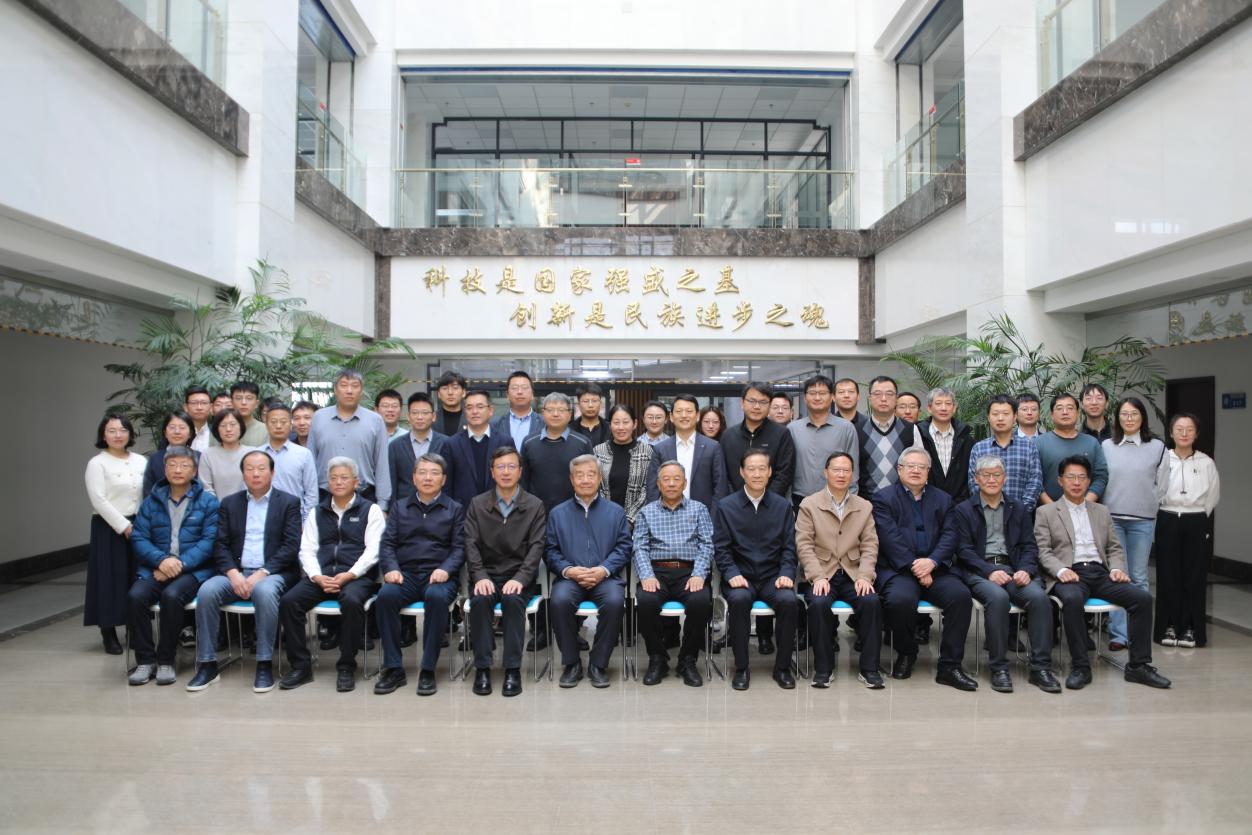
Conference Group Photo (Image by SIA)
On March 15, the Second meeting of the first academic committee of the State Key Laboratory of Robotics and Intelligent Systems was held at the Shenyang Institute of Automation (SIA) of the Chinese Academy of Sciences.The meeting was chaired by CHEN Jie, director of the academic committee, Party secretary of the Harbin Institute of Technology (HIT),and an Academician at the Chinese Academy of Engineering (CAE).
SHI Zelin, Director of SIA, delivered remarks on behalf of the institute. He expressed sincere gratitude to theacademic committee members for their longstanding support and dedication to the laboratory’s development, reaffirming the institute’s continued commitment to providing robust support for the laboratory's high-quality growth.
LIU Lianqing, deputy director of the State Key Laboratory of Robotics and Intelligent Systems, who also serves as Deputy Director of SIA, presented the 2025 annual report of the laboratory. The report detailed achievements in key research areas, talent team development, research infrastructure, and open exchanges and collaborations. It also outlined objectives for the upcoming year.
In the academic presentation session, Research YAN Shuxue, Research YANG Mingyi, and Associate Professor WANG Hongwei from SIA delivered reports on an unmanned underwater vehicle with dual-mode operation under Arctic ice, AI-model-based predictive control for the quality of energetic materials, and miniature bionic robots.
Academic committee experts came to an agreement that the laboratory, focusing on international academic frontiers and concentrating on new robotic architectures integrating biology, mechanics, and electronics, has made significant progress in areas such as cyborg robotics, brain-computer intelligent fusion robotics, and exoskeleton-assisted robotics, producing a number of high-level academic papers. Addressing major national needs, the laboratory achieved influential breakthroughs in collaborative intelligent robotics for extreme environments, including marine robotics, space robotics, and surgical robotics, serving major national endeavors such as deep-sea and deep-space exploration, aerospace engineering, and diagnosis and treatment in difficult-to-access internal body cavities. Additionally, the laboratory has developed robotic precision manufacturing systems for critical applications, effectively supporting the nation's high-end manufacturing across multiple sectors. Concurrently, the laboratory has achieved systematic new progress in talent recruitment, team building, institutional development, and standardized management.
YU Haibin, Director of the laboratory and an academician at theCAE. , expressed gratitude to the experts for their valuable suggestions and support. He stated that the laboratory will continue to strengthen its platform development, fully leverage its interdisciplinary advantages and research innovation capabilities, and align its efforts with major national strategic needs, striving to make greater contributions to advancing high-quality development in the field of robotics and intelligent systems in China.

