

Events
SIA Hosts 2026 Graduate Academic Forum on Mechanical Engineering of UCAS
From November 12 to 13, the Mechanical Engineering Sub-forum of the 2026 Graduate Academic Forum of UCAS, hosted by the University of Chinese Academy of Sciences and organized by the Shenyang Institute of Automation(SIA), Chinese Academy of Sciences, was held in Shenyang. More than 60 faculty and student representatives from seven universities and research institutes—including Dalian University of Technology, Northeastern University, and the CIOMP, the NIMTE, the XIOPM, and the IDSSE of CAS, as well as the SIA—attended the forum.
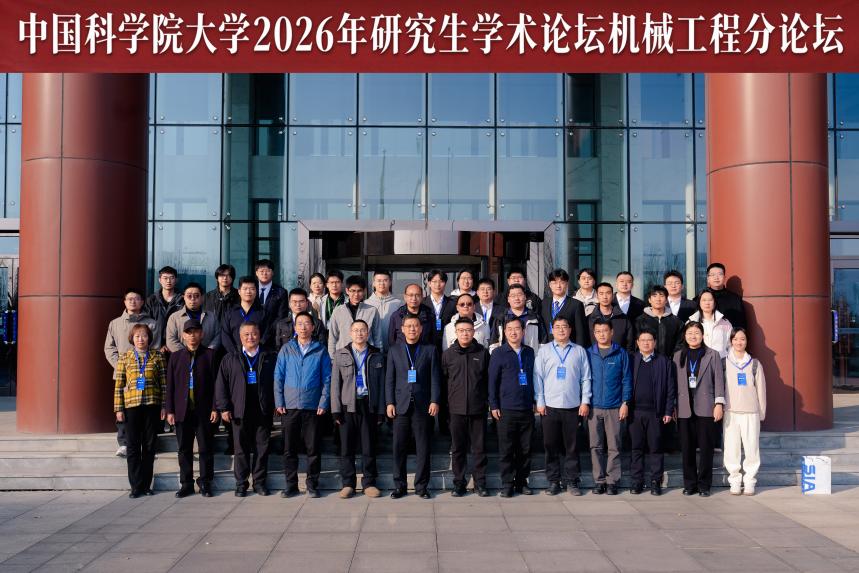
Group photo of the forum (Image by SIA)
At the opening ceremony, ZHOU Chuan, Member of the Institute Council and Director of the Human Resources and Education Department of SIA, delivered a welcome address on behalf of the organizing institution. He introduced the institute’s three main directions and its science-education talent cultivation efforts. And he noted that mechanical engineering is a key foundational discipli ne supporting high-end equipment manufacturing and the realization of scientific and technological self-reliance and strength, and that directions such as robotics, intelligent electromechanical systems, advanced manufacturing processes, and intelligent perception are at the forefront of current technological breakthroughs. He encouraged young students to devote themselves to research addressing major national needs in the high-end equipment field and to grow into innovative talents capable of shouldering important responsibilities in mechanical engineering. The opening ceremony was moderated by CHEN Xi’ai, Deputy Director of the Human Resources and Education Department.
Guided by the principle of “promoting learning through competition and innovation through conferences,” the forum featured multiple graduate student oral presentation sessions focusing on frontier directions such as space optomechanical design, underwater equipment control, dexterous robots, intelligent perception, additive manufacturing, and digital twins. The oral presentation sessions were moderated by Special Research Assistants DUAN Xun and JIANG Yueru.
Presenters reported their research approaches, experimental results, and application prospects in turn. A review panel composed of experts from the participating institutions conducted comprehensive evaluations based on dimensions including research innovation, work completeness, application value, and presentation performance, and selected outstanding academic reports. Review experts also held in-depth discussions with young students on technical difficulties, optimization schemes, and engineering implementation pathways, creating a strong atmosphere of academic exchange on site.
A total of 14 “Outstanding Academic Report Awards” were presented at the forum. ZHANG Yiwei, ZHONG Ke, and XU Chan received First Prize; YANG Jingbo, QIAO Shantong, LIU Tai, and LI Chenyu received Second Prize; and WANG Ziheng, GU Jianyi, YANG Chenhao, LI Bo, CAI Yuchen, QIAN Xuejun, and YANG Di received Third Prize.
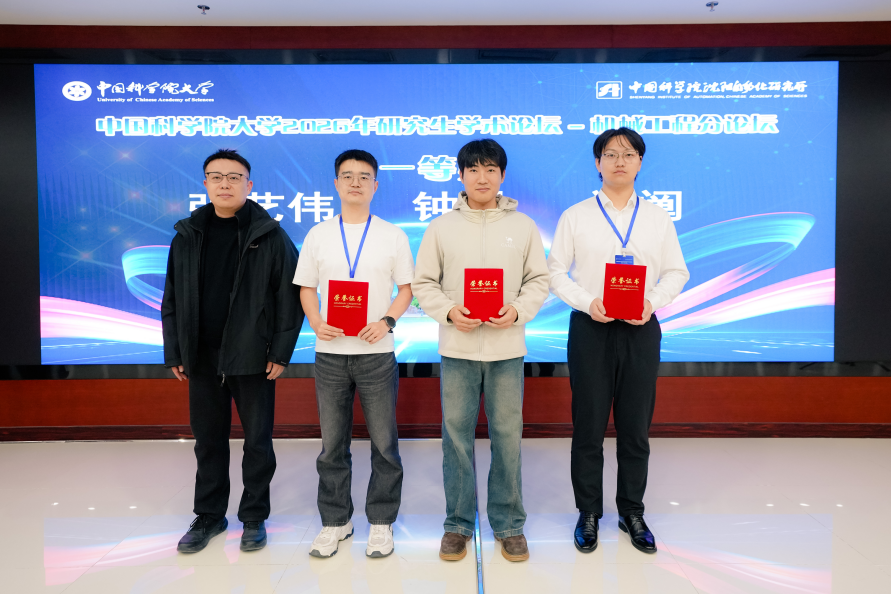
First Prize award ceremony (Image by SIA)
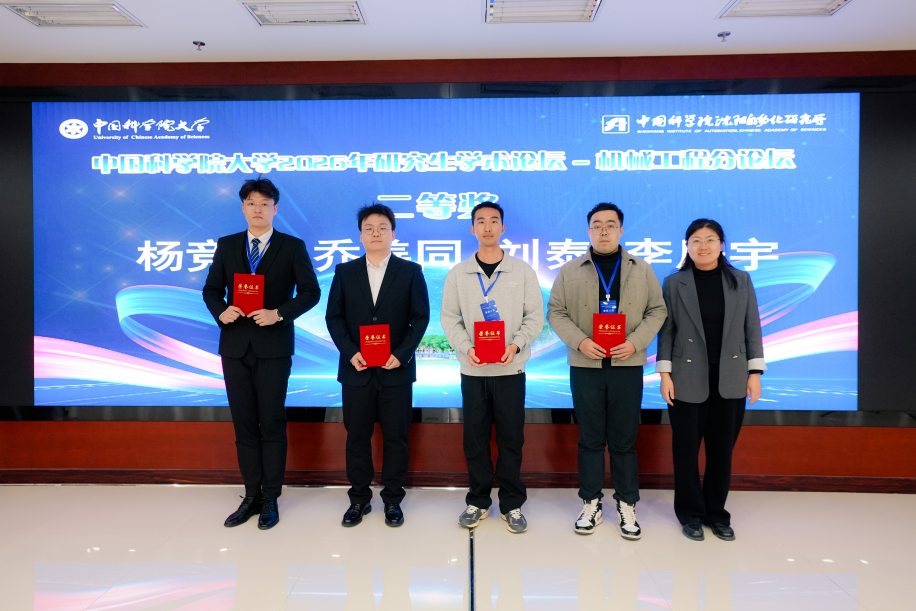
Second Prize award ceremony (Image by SIA)
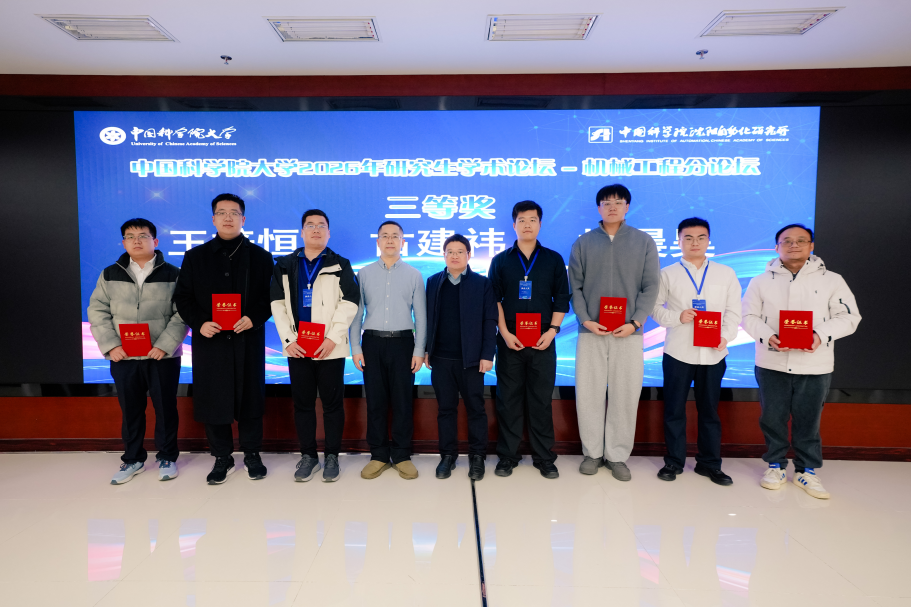
Third Prize award ceremony (Image by SIA)
To promote resource sharing and complementary strengths among training units and continuously improve graduate education quality, a graduate education seminar was the forum concurrently held during the forum. The attendees exchanged experience and shared practices on topics including graduate ideological and political education, integrated undergraduate-to-PhD training, curriculum development integrating science, education, and industry, practice-oriented education through scientific expeditions, and employment guidance, jointly exploring new models of collaborative talent cultivation.
This forum built a cross-regional, cross-institutional, and interdisciplinary academic exchange platform, showcasing the solid research foundations and innovative potential of young graduate students.

